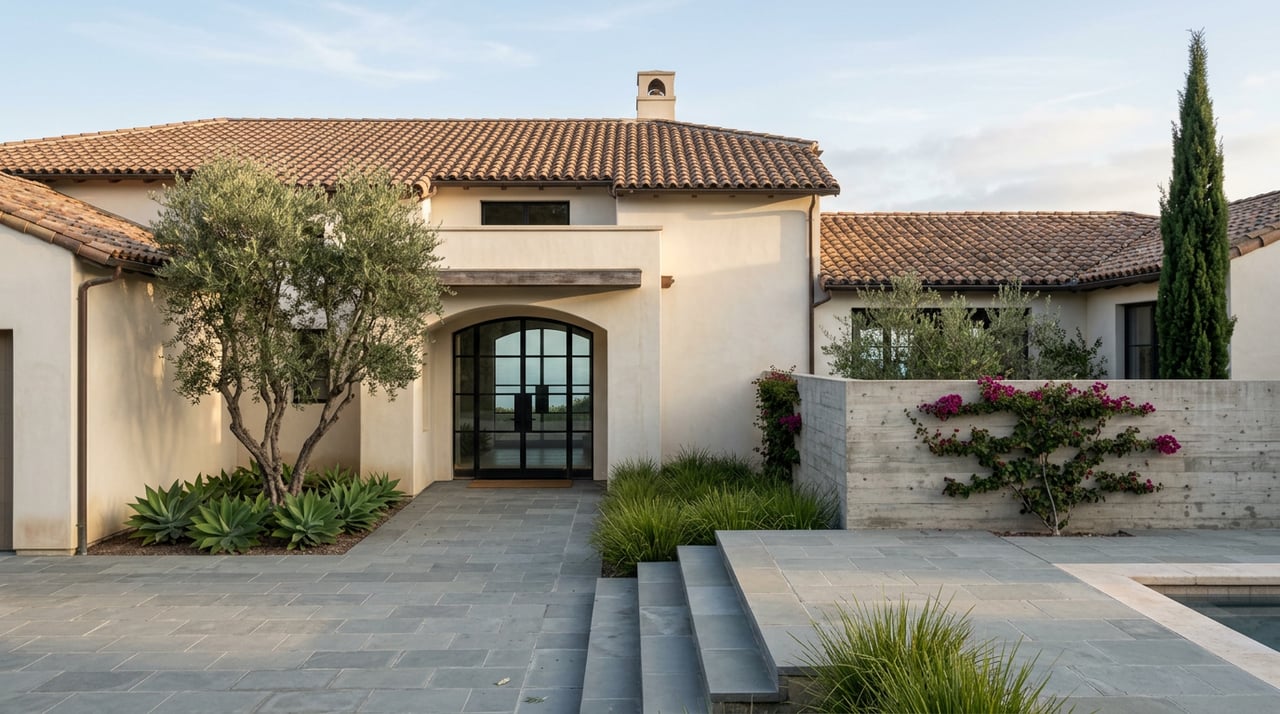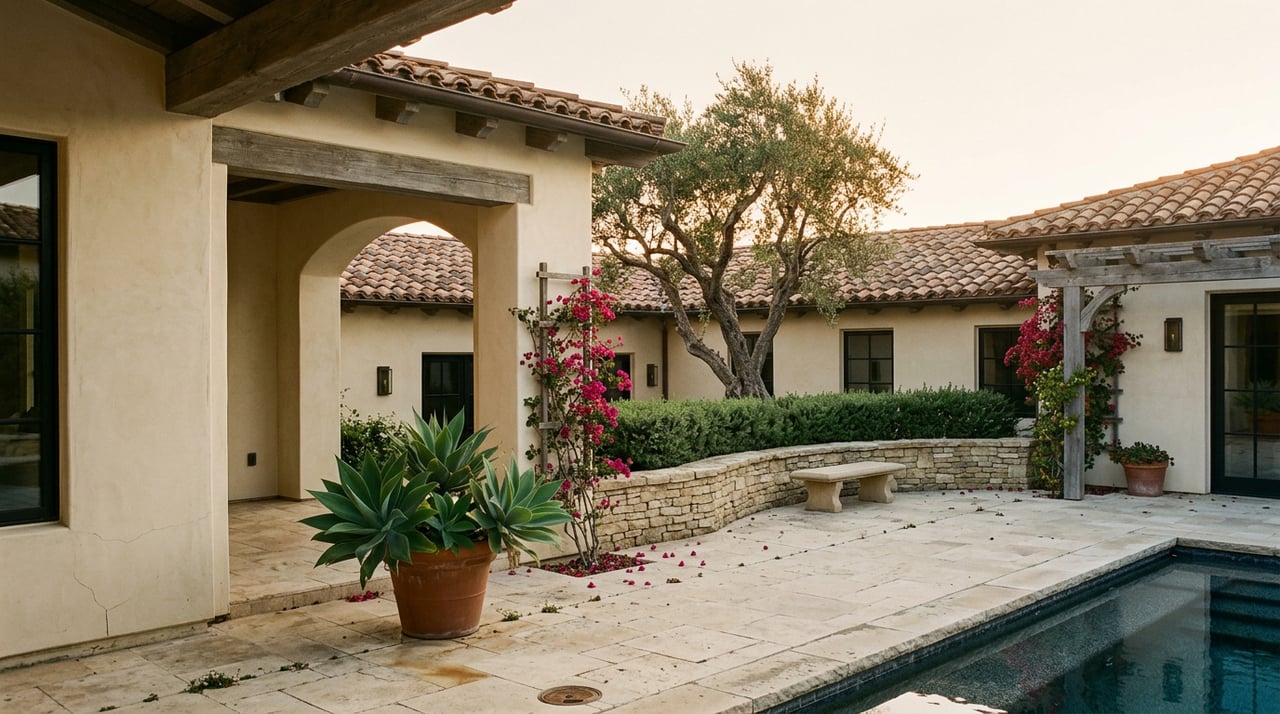
Drive from 17th Street down toward Upper Newport Bay, then cross back over to Harbor Boulevard on the other side of town, and the two halves of Costa Mesa don't look like they belong to different price universes. The houses are roughly the same age. The lots are close in size. Neither side reads as dramatically bigger or newer than the other from the street. Yet for the three months ending May 2026, the median sale price on the Eastside sat near $2.1 million while the Westside median landed around $1.3 million, according to Redfin's neighborhood-level data for that period. That's an $800,000 gap inside a single zip code, and it's not explained by the thing most buyers assume explains it: square footage.
One Median, Two Very Different Streets
Anyone shopping Costa Mesa online first meets a single citywide number. For that same three-month window ending in May 2026, the blended median sale price across the whole city was $1.4 million. That figure is a real calculation, but it's also an average of two markets that behave nothing alike once you split them at the boundary locals already use: the 17th Street corridor and the streets that back up to Upper Newport Bay Nature Preserve on the Eastside, versus the Harbor Boulevard and Newport Boulevard corridors, the Santa Ana River frontage, and the restaurant-and-creative-infill pocket known as the Triangle on the Westside.
Treat the citywide median as a starting point, not a budget. A buyer aiming for $1.4 million who hasn't picked a side of the city yet could land in the middle of Eastside's competitive range or comfortably above Westside's median, and those are two entirely different searches with different competition, different housing stock, and different negotiating postures.
The House Is Almost the Same. The Land Underneath It Isn't.
Here's where the gap stops making intuitive sense. If Eastside homes cost more because they're bigger, the price-per-square-foot should be roughly flat across both sides, with the total price scaling up simply because there's more house. That's not what the numbers show.
Eastside's median year built is 1961. Westside's is 1960. Practically the same decade of construction. Eastside's median lot size runs about 7,405 square feet against Westside's 6,969, a difference of roughly 6 percent. Average single-family square footage is 1,828 on the Eastside versus 1,614 on the Westside, about 13 percent more house. None of that comes close to explaining a price gap that size.
The price-per-square-foot data makes the disconnect explicit. Eastside is running around $1,210 per square foot as of the same three-month window ending May 2026, up nearly 15 percent year over year. Westside is at roughly $669 per square foot, down slightly over the same period. That's not a 13 percent premium matching the size difference. It's closer to 80 percent more, per square foot, for a structure that's only modestly bigger on a lot that's only modestly larger.
Eastside and Westside Costa Mesa, three months ending May 2026
| Eastside | Westside | |
|---|---|---|
| Median sale price | $2.1M | $1.3M |
| Price per square foot | ~$1,210 | ~$669 |
| Avg. single-family size | 1,828 sq ft | 1,614 sq ft |
| Median lot size | 7,405 sq ft | 6,969 sq ft |
| Median year built | 1961 | 1960 |
| Days on market | 35 (vs. 29 last year) | 34 (vs. 49 last year) |
Whatever a buyer is paying for on the Eastside, it isn't primarily square footage. It's the address itself: walking distance to 17th Street's shops and restaurants, direct proximity to the Back Bay, and a location that sits right against the Newport Beach line. The Westside isn't a stripped-down version of the same product. It's a different product with a different amenity set, anchored by the Santa Ana River trail system, Harbor and Newport Boulevard's ongoing restaurant growth around the Triangle, and access to Fairview Park, the city's largest park at roughly 208 acres. It also carries housing types the Eastside doesn't really offer at all, including condos, townhomes, and manufactured home communities, which pulls its blended price per square foot down independent of location.
The Citywide Number Moved More Than Either Side Actually Did
There's a second layer to how misleading a single median can be, and it shows up in the year-over-year direction, not just the dollar amount. Over that same three-month window, Eastside's median sale price rose 3.1 percent year over year. Westside's fell 3.7 percent. Modest moves in opposite directions. The citywide blended median, meanwhile, fell 8.1 percent year over year, a bigger drop than either half of the city actually experienced on its own.
That's not a market cratering. It's a sign that the mix of what closed escrow shifted between the two periods being compared, likely a different balance of Eastside-to-Westside sales volume in one three-month window versus the other, which can drag a blended number in a direction neither underlying market is really moving. When a citywide figure swings harder than either of its components, the number is telling you about composition, not about value. A seller on either side reading only the citywide headline could easily draw the wrong conclusion about where their own market actually stands.
Two Different Negotiations Under One City Name
The price data explains what things cost. It doesn't fully explain how a transaction actually plays out, and that's where the two sides of Costa Mesa diverge again, in the opposite direction from what the price gap suggests.
Despite carrying the higher price tag and the sharper year-over-year appreciation, Eastside's days on market crept up slightly, from 29 days a year ago to 35 days now. Westside moved the other way, compressing from 49 days down to 34. The more expensive side of the city is taking marginally longer to sell. The more accessible side is moving faster than it did a year ago, even with 25 homes sold in May 2026 against 36 in the same month last year, a smaller pool competing more quickly.
That pattern lines up with how pricing tends to work at different rungs of a market like this one. Entry-level and move-in-ready product, wherever it's located, tends to draw multiple offers within the first weekend it's listed. Higher-priced, larger, or more custom Eastside inventory has a thinner buyer pool and fewer directly comparable recent sales to lean on, which means pricing has to be precise from the start and presentation carries more weight in getting a property to close near list. A seller pricing an Eastside remodel the way they'd price a Westside condo, expecting an immediate bidding war, is applying the wrong playbook to the wrong segment. A buyer expecting to negotiate patiently on a well-priced Westside starter home the way they might on a slower-moving Eastside estate could lose it before they finish their second showing.
Deciding Which Costa Mesa You're Actually Shopping In
None of this makes one side of the city objectively better. It makes them genuinely different products wearing the same city name, and worth treating that way when you're setting a budget. If more interior square footage and yard space at a lower per-square-foot cost is the priority, Westside delivers a nearly identical construction era and comparable lot sizes at a meaningfully lower entry point, plus a housing mix, including condos and townhomes, that Eastside mostly doesn't have. If walkability to 17th Street, proximity to the Back Bay, and a location that borders Newport Beach matter more than raw square footage, that's specifically what the Eastside premium is buying, and it's worth naming it that way rather than assuming you're simply paying more for more house.
Costa Mesa also has neighborhoods that sit outside this particular comparison entirely, including the more family-oriented, single-family stretches of Mesa Verde and College Park, which run their own separate price bands and aren't part of the Eastside-Westside split described here. The point isn't that Costa Mesa has two markets. It's that the citywide median was never describing either one of them very well to begin with.
If you're comparing the two sides of Costa Mesa and trying to figure out which one actually fits your budget, your must-haves, and your timeline, I'd rather walk the streets and the comps with you than have you guess from a citywide number. Kara Duffy has been working coastal Orange County transactions long enough to know exactly which side of a listing you're looking at before the price per square foot tells you. Let's Connect.